
Online


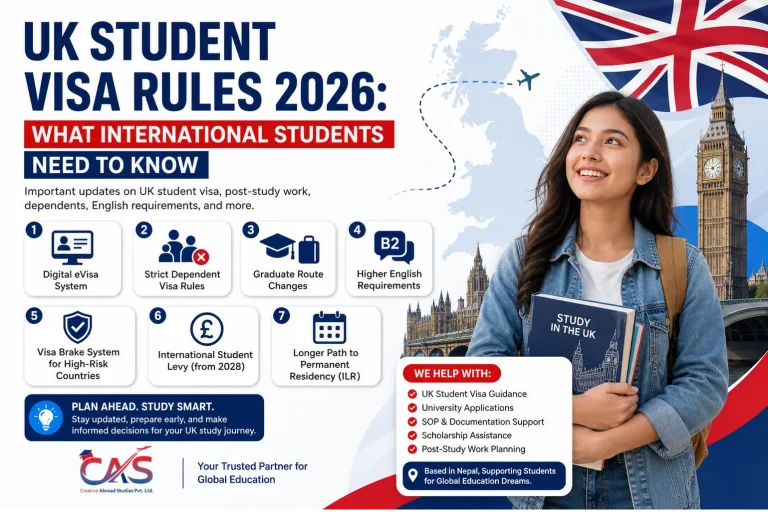
UK student visa rules in 2026 introduce digital eVisas, stricter dependent eligibility, shorter Graduate Route duration, and tighter work conditions, affecting how international students plan study and post-study opportunities in the UK.
Home > UK Student Visa Rules 2026
eVisa Shift
Dependent Limits
Shorter Route
Work Restrictions
The United Kingdom continues to be one of the most popular study destinations for international students. However, the UK immigration system is undergoing significant changes between 2025 and 2028. These updates affect student visas, post-study work opportunities, dependent rules, and long-term settlement pathways.
If you are planning to study in the UK in 2026 or beyond, understanding these changes is extremely important for proper planning.
At Creative Abroad Studies, we help students stay updated with the latest visa policies and provide complete guidance for UK study applications, admissions, and visa processing.
One of the biggest changes is the transition from physical Biometric Residence Permits (BRPs) to a fully digital system.
From July 2025, all international students will need to use a UKVI online account (eVisa system) instead of carrying a physical card. This digital record will prove your immigration status in the UK.
Students will be required to:
This change improves security and reduces dependency on physical documents, but students must ensure they correctly set up their digital profile before arrival.
The UK government has tightened rules around bringing family members.
From 1 January 2024 onwards, most international students are no longer allowed to bring dependents. Only students enrolled in postgraduate research programs such as PhD or research-based master’s degrees are eligible.
This means:
This change significantly impacts students planning to study with family support in the UK.
The Graduate Route visa allows students to stay in the UK after completing their degree.
However, major changes are expected:
Previously, students benefited from a 2–3 year post-study work option, but this reduction means students must plan career progression earlier.
This makes course selection and career planning even more important for international students.
From January 2026, students applying for Graduate Route or Skilled Worker visas will need a higher English proficiency level.
The required standard will be:
This means students must improve their English skills beyond basic academic requirements to qualify for work and post-study visas.
The UK government has introduced a “visa brake” system starting in 2026.
Under this system:
While this policy is not applied universally, it highlights stricter immigration control measures.
Students should ensure strong documentation and genuine study intent when applying.
A new financial policy is also planned.
From August 2028, international students may be required to pay a £925 annual levy per year of study.
This is intended to support the UK education system, but it will increase overall study costs for international students.
The UK is also changing its settlement system.
Instead of a 5-year route, many visa categories will shift to a 10-year pathway to Indefinite Leave to Remain (ILR).
This means:
Students aiming to settle in the UK should plan long-term accordingly.
If you are planning to study in the UK, here are key steps to follow:
UK immigration policies are becoming more structured and controlled, especially for international students. While the UK remains a top destination for education, students must be more strategic in planning their studies, finances, and career pathways.
At Creative Abroad Studies, we guide students through every step of their UK study journey, including university selection, visa filing, documentation, and post-study planning.
If you are planning to study in the UK in 2026 or beyond, professional guidance can make your process smoother and more secure.
The key updates include the digital eVisa system, stricter dependent rules, higher English requirements, and changes to the Graduate Route visa duration.
Only PhD and postgraduate research students are allowed to bring dependents. Most undergraduate and taught master’s students are not eligible.
The Graduate Route allows students to stay in the UK after studies. From 2027, it is expected to reduce to 18 months for most students and 36 months for PhD graduates.
Creative Abroad Studies provides full support including university selection, visa guidance, documentation, SOP writing, and UK study planning.

Creative Abroad Studies © All Rights Reserved. Design & Developed by ACD Techs Pvt. Ltd.